Stick Shift Is Back: Why Younger Drivers Are Demanding Manual Sports Cars From Rental Fleets
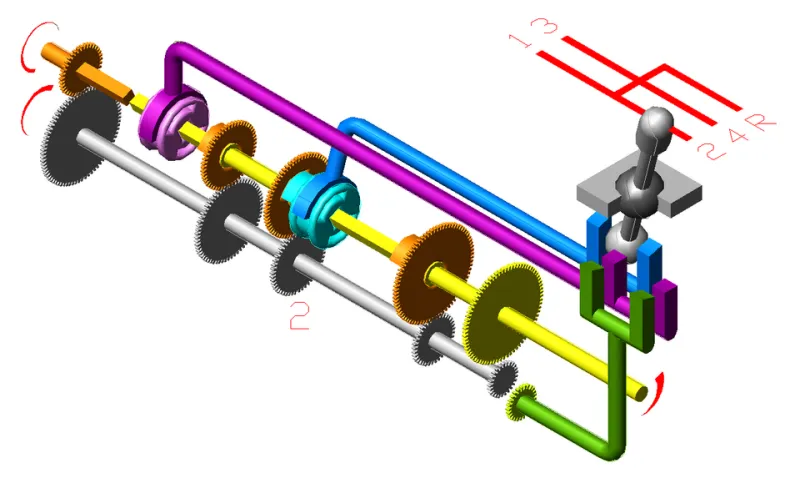
Photo: World arm lamp at English Wikipedia, Public domain, via Wikimedia Commons
A few years ago, if you'd told most people in the automotive industry that Gen Z drivers would be lining up to rent manual transmission sports cars, you'd have gotten a polite laugh and a subject change. The conventional wisdom was clear: automatics had won, paddle shifters were the compromise, and the three-pedal setup was headed for the same museum shelf as the cassette deck.
That conventional wisdom is looking pretty shaky right now.
Across specialty rental companies and enthusiast-focused fleets in 2024, a quiet but unmistakable trend has emerged. Younger drivers — many of whom learned to drive exclusively in automatics — are actively seeking out manual gearboxes. Not because they have to. Because they want to.
So what's driving this? And what does it mean for the rental market and car culture more broadly? We dug in.
The Numbers Don't Lie
Let's start with some context. Manual transmissions now account for less than 2% of new vehicles sold in the United States, according to industry tracking data. That's a staggering collapse from the 1980s, when stick shifts were standard equipment on most economy and sport models. The decline has been steady, relentless, and largely market-driven — most buyers, when given the choice, opted for the convenience of an automatic.
But the rental market tells a different story, at least in the enthusiast segment. Companies that specialize in sports car and performance vehicle rentals — think Porsche 911s, Mazda MX-5 Miatas, Ford Mustang GTs, and similar vehicles — report that manual variants are consistently their highest-demand inventory. In some cases, they're charging a premium for the privilege of rowing your own gears, and customers are paying it without much pushback.
One California-based specialty rental operator noted that their manual Miata books out weeks in advance during peak season, while their automatic-equipped equivalent sits available far more often. "People request the manual specifically," they told us. "And a disproportionate number of those requests are coming from people in their mid-twenties."
The Tactile Rebellion
There's a cultural undercurrent here that's worth examining. We live in a world of increasing abstraction. Work happens on screens. Communication happens through apps. Experiences are mediated, filtered, and optimized for frictionlessness. Everything is getting smoother, faster, and more disconnected from physical sensation.
Driving a manual transmission is the opposite of all that.
It demands your full attention. Every gear change is a small act of coordination — clutch in, shift, clutch out, throttle modulated — and when you get it right, there's a satisfaction to it that's difficult to articulate but immediately recognizable. You're not just operating a vehicle; you're in conversation with it. The car talks back through the pedals and the shifter, and you have to listen.
For a generation that grew up with touchscreens and driver assistance systems doing more of the work, that kind of raw mechanical engagement is genuinely novel. It's not nostalgia exactly — you can't be nostalgic for something you never experienced. It's more like discovery. The realization that driving can be an active, physical, mentally engaging pursuit rather than a passive commute.
"I rented a manual Mustang for a weekend trip through the Smokies," said Marcus, a 26-year-old software developer from Nashville we spoke with at a car meet. "I'd never driven stick before. My buddy talked me through the basics in a parking lot for twenty minutes, and then we just went. By the end of the weekend, I didn't want to go back. My daily driver is an automatic now and it feels boring by comparison."
That sentiment comes up again and again in enthusiast communities online and in person.
What Rental Companies Are Saying
We reached out to several specialty rental operators to get their read on the situation, and the consensus was consistent: the demand is real, it's growing, and it's skewing younger.
One operator based in the Pacific Northwest, who rents a fleet that includes manual Porsches and a couple of classic muscle cars, put it this way: "Five years ago, I'd get the occasional request for a manual from an older guy who grew up driving them. Now I'm getting requests from 24-year-olds who've never driven one but specifically want to learn on a road trip. That's a different kind of customer — they're motivated by the experience, not just the destination."
Another operator in the Southeast, who focuses on performance vehicles for mountain driving routes, echoed the point. "We added a second manual Miata to the fleet this year because the first one was booked so consistently. It's not a niche anymore. It's becoming a feature people shop for."
The business logic is following the demand. Several companies have started marketing their manual inventory explicitly, treating it as a selling point rather than a footnote. Some have even added tutorial content — brief driving guides or short videos — to help customers who want to try a manual but aren't confident in their skills yet.
The Role of Car Culture Online
It would be incomplete to talk about this trend without acknowledging the role that automotive content online has played in stoking it. YouTube channels dedicated to driving experiences, manual transmission tutorials, and enthusiast road trips have accumulated massive audiences. Platforms like TikTok and Instagram have made car culture visually accessible in ways it never was before — and a lot of that content celebrates the analog, the mechanical, and the raw.
When you watch someone heel-toe downshift through a mountain pass in a vintage 911, something primal gets activated. The sound, the movement, the obvious skill involved — it's compelling in a way that watching someone tap a paddle shifter just isn't. That content creates aspiration, and aspiration creates demand.
Manufacturers have noticed too. Honda brought back a manual option on the Civic Si and Type R. Toyota kept the manual alive in the GR86. Porsche still builds the 911 GT3 as a manual-only car (at least in certain configurations). The message from the industry is increasingly clear: the manual isn't dead, it's been repositioned as a premium, driver-focused choice.
What This Means for the Enthusiast Rental Space
For rental companies, the takeaway is pretty straightforward: if you're not carrying manual inventory in your performance and sports car segment, you're leaving money on the table and missing a growing customer base.
For drivers, the message is even simpler. If you've never driven a manual, a rental weekend is genuinely one of the best ways to try it. You get a proper sports car, a real driving environment, and no long-term commitment. If you love it, great — you've unlocked a whole new dimension of driving. If it's not for you, no harm done.
But based on everything we're seeing, most people who try it end up hooked.
The Bottom Line
The manual transmission's resurgence in the rental market isn't a fluke or a nostalgia blip. It's a genuine cultural signal — younger drivers rejecting the passive, automated driving experience in favor of something that actually engages them. In a world where cars are increasingly doing the driving for us, the act of deliberately choosing to do more work, not less, is quietly radical.
At GT Drivez, we've always believed that the best drives are the ones where you're fully present — hands on the wheel, eyes on the road, completely in the moment. A manual gearbox doesn't just change how you drive. It changes how you think about driving.
And right now, a whole new generation is figuring that out.