Parked and Profitable: The Hidden Economics Behind Rental Companies Sitting on Thousands of Idle Cars
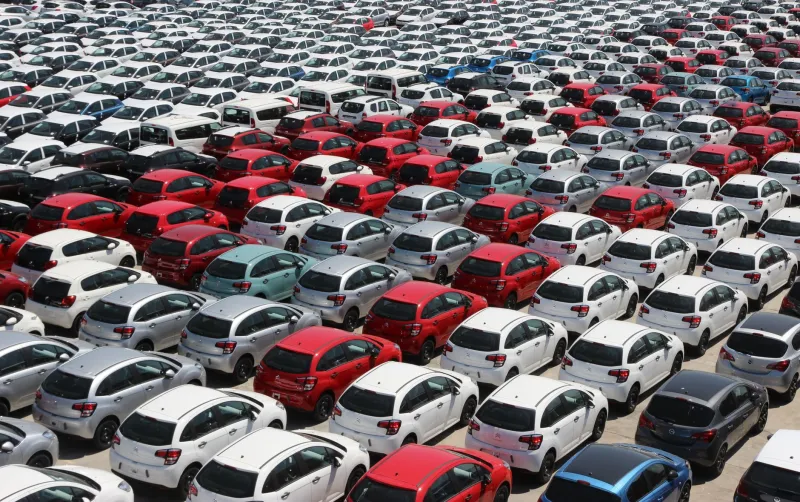
If you've tried to book a rental car lately and walked away sticker-shocked — or worse, empty-handed — you're not imagining things. Something weird is happening inside the world's largest rental fleets, and it goes a lot deeper than "supply and demand." The truth is, rental companies are playing a long game, and your next booking is a pawn on their board.
Let's break down what's actually going on.
The Pandemic Hangover Nobody Talks About
Cast your mind back to 2020. Travel collapsed overnight. Rental companies like Hertz, Enterprise, and Avis dumped hundreds of thousands of vehicles at auction just to stay solvent. Hertz literally filed for bankruptcy. At the time, it looked like a desperate move. In hindsight, it was a catastrophic miscalculation.
When travel came roaring back in 2021 and 2022, the fleets were gutted. The chip shortage had already strangled new vehicle production, meaning rental companies couldn't just call up Detroit and restock. Prices went insane — people were paying $500 a day for a Chevy Malibu in Miami. It was chaos.
Fast forward to today, and you might expect things to have normalized. They haven't. Not really. Because now the pendulum has swung hard in the other direction, and rental companies are hoarding vehicles with a level of paranoia that would make a doomsday prepper proud.
The Stockpile Strategy
Here's something that doesn't make the financial press very often: major rental companies are currently sitting on vehicle inventories that, in some cases, exceed pre-pandemic levels. Lots in suburban markets, airport overflow facilities, and off-site storage areas are quietly packed with cars that aren't being actively rented.
So why aren't they renting them out? A few reasons, and they're all deeply corporate.
First, economic forecasting. Rental companies have armies of analysts watching recession indicators, travel booking trends, and fuel prices. When those analysts predict a slowdown — even a soft one — fleet managers pull vehicles off active rotation rather than risk having depreciating assets sitting at locations with low utilization rates. A car that's "available" at an airport but rarely rented still costs money in insurance, registration, and maintenance. Better to consolidate it somewhere cheap and wait.
Second, residual value protection. Rental companies don't just make money renting cars — they make a significant chunk of change selling used vehicles at the back end of a car's rental life. If the used car market softens (and it has been softening), flooding that market with fleet disposals tanks the resale price. So they hold. They wait for the right moment to unload vehicles at maximum value.
Third, strategic pricing leverage. Fewer cars in active circulation means tighter availability, which means pricing algorithms can push rates higher during peak periods. It's not price gouging in the traditional sense, but it's not exactly consumer-friendly either.
What the Chip Shortage Actually Changed Long-Term
The semiconductor shortage didn't just create a temporary blip. It fundamentally rewired how rental companies think about fleet acquisition. Before the pandemic, the model was simple: buy new cars cheap from manufacturers through fleet deals, run them for 12-18 months, sell them used, repeat. Volume was everything.
Now, rental companies are holding vehicles longer — sometimes 24 to 36 months — because replacement supply is less predictable and new vehicle prices have remained stubbornly high. That means older cars in the fleet, more maintenance costs, and a more complicated calculus around when to retire a unit.
For you, the renter, this translates to a few things: you might encounter higher-mileage vehicles, slightly older model years, and in some markets, genuinely limited choices in specific vehicle categories.
The Regional Imbalance Problem
Here's something that catches a lot of travelers off guard: the inventory crunch isn't uniform. Some markets are flush. Others are bone dry. And the mismatch can be dramatic.
Sunbelt cities like Phoenix, Tampa, and Las Vegas tend to see heavy seasonal demand swings. Rental companies concentrate vehicles there during peak winter travel months, which can leave mid-sized markets — think secondary airports in the Midwest or Mountain West — chronically underserved. Meanwhile, corporate travel hubs like Dallas or Chicago might have solid weekday supply that collapses completely on holiday weekends.
The lesson here is geographic: where you're renting matters as much as when.
Insider Moves for Booking When Supply Is Tight
Okay, enough doom and gloom. Let's talk about how to actually win in this environment.
Book early, but keep checking. Rental pricing is dynamic, similar to airline tickets. Rates can drop as a pickup date approaches if a location is tracking lower-than-expected demand. Set a reminder to check your booking every week or so, and don't be afraid to cancel and rebook at a lower rate if the terms allow it.
Skip the airport. Off-airport locations frequently have better availability and lower rates because they're not subject to the same demand spikes that airport counters see. Yes, you'll need a ride from the terminal, but the savings — and the selection — can be worth it.
Broaden your vehicle class. If compact cars are sold out, try searching for mid-size or even full-size options. Counterintuitively, larger classes sometimes have more inventory because demand for them is lower. You might end up in a nicer car for a comparable price.
Use a broker or aggregator. Sites that pull inventory from multiple rental companies simultaneously can surface availability that individual brand websites won't show you. When supply is tight, casting a wider net is just smart.
Call the location directly. This still works. A local branch manager has more flexibility and more real-time awareness of their lot than any app or website. If you explain your situation, you'd be surprised what can shake loose.
Join loyalty programs. Even at the basic tier, loyalty members often get access to a wider selection of vehicles and are less likely to be turned away during inventory crunches. It costs nothing to sign up.
The Bigger Picture for Car Enthusiasts
For those of us who rent not out of necessity but out of genuine love for driving — trying different vehicles, exploring new roads, chasing that next great drive — the current inventory landscape is genuinely frustrating. The spontaneous weekend rental is harder to pull off. The specific vehicle you had your eye on might not be there when you show up.
But it also means that when you do your homework, when you book smart and think ahead, the reward is that much sweeter. The open road hasn't gone anywhere. The game has just gotten a little more interesting.
Know the rules. Play accordingly. Drive everything.