Before You Sign the Papers, Rent the Car: How Smart Buyers Are Using Rentals to Outsmart the Dealership

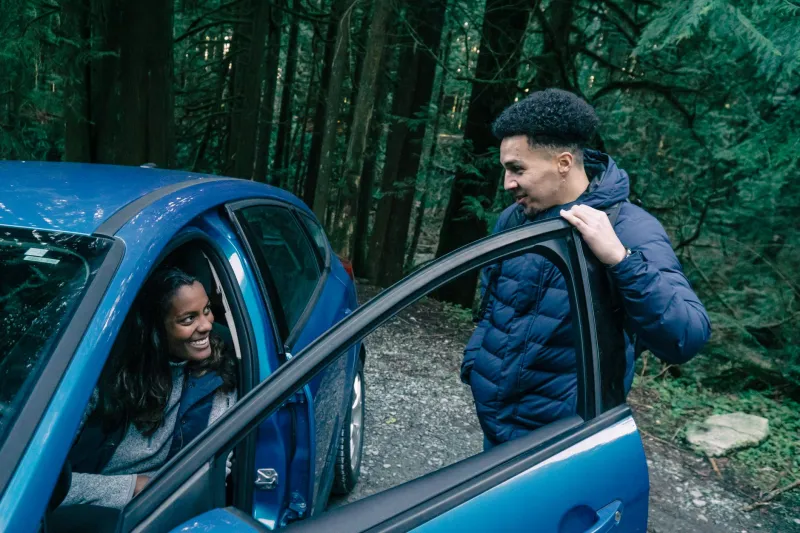
Photo: person driving rental car on highway test drive decision, via authenticwisconsin.com
Here's a scenario that plays out thousands of times every single day across America: someone walks into a dealership, sits in a car that smells like fresh leather and ambition, takes a 12-minute spin around the block with a salesperson riding shotgun, and then makes a $40,000 decision. Maybe a $60,000 one. Sometimes more.
That's the traditional test drive. And honestly? It's kind of a joke.
You can't learn a car in 12 minutes. You can't learn it on a route the salesperson is quietly steering you toward. You definitely can't learn it while someone is asking you questions about your trade-in and casually mentioning that this trim level is "going fast."
A growing number of serious drivers have figured out a better way. They rent first.
The Problem With the Traditional Test Drive
Dealerships are designed to create momentum toward a sale. Every element of the experience — the lighting, the smell, the carefully choreographed handoff between staff — is engineered to get you emotionally invested before you've had a chance to think clearly.
The test drive itself is a controlled variable. You're on unfamiliar roads, you're distracted, and you're subconsciously performing for the person in the passenger seat. It's not a real evaluation. It's a demo.
Contrast that with spending a full weekend behind the wheel of the same vehicle on your own terms — your commute, your grocery run, your Saturday morning backroad. That's data. That's the kind of firsthand knowledge that actually informs a smart purchasing decision.
Why Rental Platforms Are the Smartest Research Tool Available
Services like Turo, Hertz, Enterprise, and the peer-to-peer rental space have quietly become one of the most powerful resources in the car buyer's toolkit. The inventory has expanded dramatically over the past several years, and it's now entirely realistic to rent the exact trim level of a vehicle you're considering — sometimes even the specific color — for a weekend or a week.
The economics make sense, too. Dropping $150 to $300 on a rental weekend before committing to a multi-year loan or lease is not a cost. It's insurance. The number of buyers who've walked away from a rental experience thinking "actually, no" — and saved themselves from years of buyer's remorse — is impossible to count, but it's real.
Beyond the major platforms, some manufacturers have started catching on. Several brands now offer their own structured extended test-drive programs, though these tend to be more curated and less revealing than a true independent rental experience.
What to Actually Pay Attention to During Your Rental
This is where most casual renters leave money on the table. They drive the car, enjoy it or don't, and return it without having gathered much useful information. If you're renting with purchase intent, you need to treat this like a job.
Visibility and ergonomics. Spend time adjusting the seat and mirrors from scratch, as if you just bought it. Does the driving position feel natural after an hour, or are you already compensating? Check blind spots on real highway merges, not parking lot practice runs.
Infotainment and tech integration. This is one of the most underrated dealbreakers in modern cars. Pair your phone. Try to use navigation while driving. Adjust the climate controls without looking. If the interface drives you crazy after two days, it'll drive you crazy for five years.
Highway noise and ride quality. Dealers almost never route test drives onto interstates. Get the car up to 75 mph on a real road and just listen. Road noise, wind noise, and suspension behavior at speed are things you absolutely cannot evaluate in a parking lot.
Cargo and daily usability. Load it up. Bring your actual stuff — gym bag, stroller, golf clubs, whatever your life involves. See if the trunk works for your life, not just in theory.
Fuel behavior and range anxiety. If you're evaluating an EV or a hybrid, this is critical. Live with the charging logistics for a weekend. Find out how the range estimate holds up in real-world conditions before you're locked in.
How it feels after 200 miles. Fatigue is a real factor that never shows up on a spec sheet. Some cars feel great for the first 30 minutes and start to wear on you. Others get better the more time you spend in them. You won't know which category your candidate falls into until you've actually put in some miles.
The Psychology of Renting to Buy
There's something interesting that happens when you remove the pressure of the dealership environment. Without a salesperson present, without the clock ticking toward closing time, you start noticing different things.
The small annoyances surface. The door sound that isn't quite right. The way the steering wheel blocks part of the gauge cluster at a certain angle. The cup holder that only fits one of your two usual travel mugs. These aren't dealbreakers in isolation, but they're the things that accumulate into low-grade dissatisfaction over a long ownership period.
On the flip side, the genuine strengths of a vehicle become clearer too. When you're not distracted by the sales process, you notice when a car just works — when the controls are intuitive, the power delivery feels right, and you finish a long drive feeling energized rather than drained. That's the feeling you want to be chasing.
Building Your Rental Research Strategy
If you're serious about using rentals as a buying tool, approach it with a plan.
Narrow your list to two or three genuine contenders before you start renting. Renting ten different cars is expensive and ultimately confusing. Renting two or three with clear comparison criteria is productive.
Rent each vehicle for at least a full weekend, ideally including a mix of city driving, highway miles, and at least one longer trip. A single day isn't enough to shake loose the honeymoon effect.
Keep notes. Seriously — write things down or voice-memo yourself as you drive. The specific details you notice in the moment will blur together later, and you want to be making your final decision based on documented observations, not vague impressions.
And when you do eventually walk into the dealership, walk in knowing more about the car than the salesperson expects you to. That knowledge changes the entire dynamic of the negotiation.
The Bottom Line
The rental-before-buying approach isn't a hack or a trick. It's just a rational response to the fact that buying a car is one of the biggest financial decisions most people make, and the traditional test drive process is completely inadequate for that level of commitment.
At GT Drivez, we've always believed that driving is something you do, not something you plan around. Renting before buying is just that philosophy applied to the purchase process — get behind the wheel, put in real miles, and let the road tell you what you need to know.
The dealership will still be there when you're ready. Take the time to actually be ready.