Four Doors, Zero Apologies: The Case for Renting a Sedan and Actually Driving It
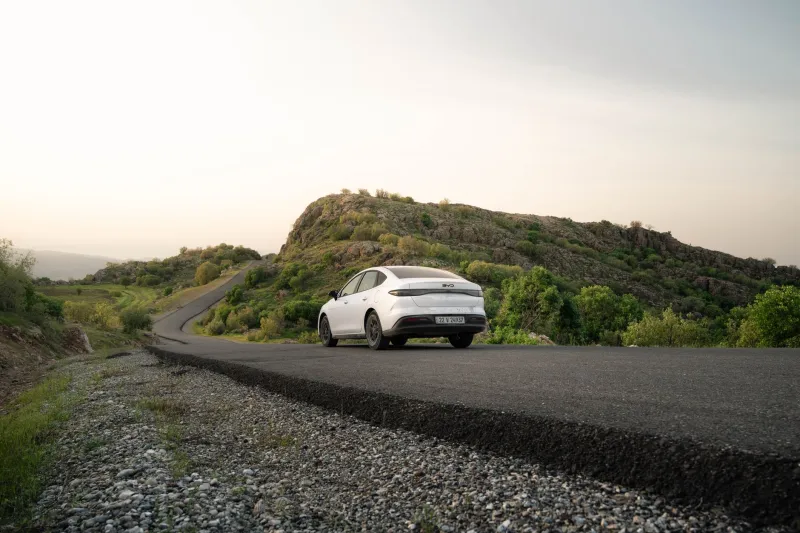
I'll admit it. I've done it too.
Stood at the rental lot, spotted an available upgrade to an SUV, and taken it — not because I needed the cargo space or the extra seats, but because it felt like the obvious choice. More car. Better value. Easier to justify the daily rate.
And then I spent a week driving something that handled like a piece of furniture and consumed fuel like it was angry about something, wondering vaguely why driving didn't feel as fun as it used to.
The rental sedan doesn't get respect from enthusiasts. It barely gets a glance. It's the car you end up with when nothing else is available, the consolation prize, the thing you apologize for in the group chat when everyone asks what you're driving. That reputation is wrong, and I want to make the case — a real, driving-based case — for why the mid-size sedan is actually the secret weapon sitting in plain sight at every rental lot in America.
The Weight Argument Starts Everything
Let's get into the physics for a second, because this is where the sedan's case is strongest.
A Toyota Camry weighs around 3,300 pounds. A RAV4 — Toyota's compact SUV, which people rent instead of the Camry constantly — weighs closer to 4,000 pounds. That's 700 pounds of additional mass that has to be managed by the same basic platform, the same braking system, the same tires, and in many cases a similar or identical engine.
Weight is the enemy of driving engagement. It's not the only factor, but it's a foundational one. A lighter car changes direction more eagerly. It stops shorter. It puts less stress on components that determine how the car communicates with the driver — the steering, the brakes, the suspension response. Every pound you shed is a pound that doesn't have to be managed through a corner.
When you get into a mid-size sedan and push it on a winding back road, you feel those 700 missing pounds. The car rotates through corners with a willingness that its taller, heavier SUV sibling simply cannot match. It's not about horsepower. It's about mass and geometry.
The Center of Gravity Nobody Talks About
SUVs sit higher. That's the point. Visibility, road presence, the vague sense of safety that height provides — all of it is a feature, not a bug, for most buyers.
But height raises the center of gravity, and a higher center of gravity means more body roll in corners. More body roll means the car leans away from the direction you're turning, which disconnects you from what the tires are actually doing. The car feels vague. Inputs feel blunted. You're driving through a layer of cotton.
A sedan's lower roofline isn't a compromise. It's an engineering advantage. Sit in a Mazda6 or a Honda Accord and push through a long sweeping bend at real speed, and the car stays flat in a way that an SUV simply won't. You can feel the grip. You can sense when you're approaching the limit. That feedback is the whole point of driving for anyone who actually cares about it.
The Rental Sedan Is Often Better Maintained Than You Think
Here's something counterintuitive: rental sedans in the mid-size class often live easier lives than the SUVs in the same fleet. Families with gear and kids and roof boxes beat on the SUVs. Business travelers in a hurry grab the SUVs. The sedan frequently gets the renter who just needed a car — someone who drove it sensibly, returned it on time, and moved on.
That means the tires might actually have tread. The brakes might not be cooked. The suspension components might not have been abused by someone who thought ground clearance meant they could take speed bumps at 30 mph.
A well-maintained rental sedan — a Camry, an Accord, a Mazda6 if you're lucky enough to find one, a Nissan Altima — is a genuinely capable car. These aren't penalty boxes. These are vehicles that engineers spent years developing, that won comparison tests against serious competition, that enthusiast publications praised before the SUV wave buried the category in public consciousness.
The Back Road Test
I drove a rental Camry through the Smoky Mountains two years ago, and I'm not embarrassed to say it was one of the better driving days I've had in a rental car. The route from Gatlinburg toward Deals Gap — the Tail of the Dragon is the famous part, but the whole corridor is spectacular — rewards a car that can actually be placed precisely.
The Camry wasn't fast. It wasn't exotic. But it was accurate. Turn-in was clean. The car went where I pointed it. The brakes gave me real feedback. I could push into a corner with some confidence about what the car would do, and it rewarded that confidence.
An SUV on the same road would have been competent. It would have made it through fine. But it wouldn't have communicated. It wouldn't have made me feel like a participant rather than a passenger. There's a meaningful difference between those two experiences, and the sedan is almost always on the right side of it.
The Practical Bonus Round
Since we're here: the sedan is also just better for road trips in ways that don't get acknowledged enough.
Fuel economy in a mid-size sedan typically runs 5 to 10 mpg better than a comparable SUV. On a 3,000-mile trip, that's real money — potentially $80 to $150 in fuel savings depending on current prices and the specific vehicles involved.
The sedan is also easier to park in urban environments, which matters if your road trip passes through actual cities. It fits in standard parking garages without the roof clearance anxiety. It maneuvers in tight lots without requiring a three-point turn every time.
And highway noise — the thing that exhausts you on long drives before you even realize it — is generally lower in a sedan. Less frontal area, lower drag coefficient, less wind buffeting at the A-pillars. Arrive less tired. Drive more the next day.
Next Time, Choose Differently
The SUV will be there. It'll always be there, waiting, looking sensible and versatile and easy to justify. And sometimes it's the right call — when you actually need the space, when you're driving unpaved roads, when the whole crew is coming along.
But when it's just you and a stretch of American highway and something inside you wants to feel like a driver again? Walk past the crossovers. Find the sedan. Take the keys.
Some of the best drives of your life are sitting in the row nobody's looking at.